
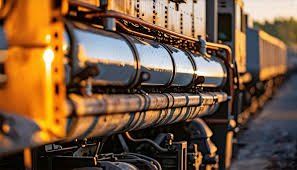
The Backbone of Reliable Thermal Management
In today's industrial environment, machinery operates under increasingly demanding conditions. Whether it's a diesel generator running continuously, a railway locomotive transporting heavy loads, or industrial equipment working in high-temperature environments, effective thermal management is essential for performance and longevity.
This is where remote and industrial radiators become indispensable. Designed to dissipate excess heat efficiently, these cooling systems help maintain optimal operating temperatures, ensuring equipment reliability and minimizing costly downtime.
What Are Remote and Industrial Radiators?
Industrial radiators are heavy-duty heat exchangers designed to transfer heat from engine coolant, hydraulic oil, transmission fluids, or other working fluids into the surrounding air.
Remote radiators are specialized cooling systems installed away from the primary equipment. Instead of being mounted directly on the engine or machine, they are positioned at a distance and connected through piping systems. This configuration is particularly beneficial in applications where space constraints, ventilation requirements, or environmental conditions make conventional cooling arrangements impractical.
How Do Industrial Radiators Work?
Industrial radiators operate on a simple but highly effective principle:
- Hot coolant or fluid enters the radiator.
- Heat is transferred through tubes and fins.
- Airflow generated naturally or by fans removes the heat.
- The cooled fluid returns to the equipment for recirculation.
This continuous process prevents overheating and ensures stable operating temperatures even under extreme workloads.
Key Components of Industrial Radiators
Radiator Core
The primary heat transfer section consists of tubes and fins.
Cooling Fans
Provide forced airflow to enhance heat dissipation.
Headers and Tanks
Distribute coolant uniformly throughout the radiator.
Mounting Structure
Supports the radiator assembly and absorbs operational vibrations.
Protective Shrouds
Improve airflow efficiency and safeguard critical components.
Advantages of Remote Radiator Systems
Enhanced Installation Flexibility
Remote radiators can be positioned in locations with better airflow and easier maintenance access.
Improved Equipment Reliability
Separating the cooling system from the engine room reduces heat buildup around critical equipment.
Reduced Noise Levels
Remote placement allows cooling fans and radiators to operate away from occupied work areas.
Better Cooling Efficiency
Access to unrestricted airflow often improves overall heat rejection performance.
Easier Maintenance
Technicians can service the radiator without interfering with primary equipment operations.
Industrial Applications of Remote and Industrial Radiators
Power Generation
Diesel and gas generator sets require reliable cooling systems to maintain uninterrupted power production.
Railway Locomotives
Radiators play a crucial role in managing engine temperatures during long-distance operations and heavy-duty service conditions.
Construction Equipment
Excavators, loaders, cranes, and mining machinery depend on robust cooling systems to operate efficiently in harsh environments.
Industrial Compressors
Large air compressors generate significant heat that must be effectively dissipated.
Marine Applications
Industrial radiators assist in maintaining stable temperatures for marine engines and auxiliary systems.
Oil & Gas Industry
Cooling systems support continuous operation of critical process equipment in demanding environments.
Factors to Consider When Selecting an Industrial Radiator
Heat Rejection Requirements
The radiator must be capable of handling the equipment's thermal load.
Environmental Conditions
Ambient temperature, dust levels, humidity, and altitude can impact cooling performance.
Space Availability
Installation constraints influence radiator size and configuration.
Airflow Design
Proper airflow management is essential for maximum efficiency.
Material Selection
Aluminum radiators are often preferred for their lightweight design, corrosion resistance, and excellent heat transfer properties.
Maintenance Accessibility
Easy access reduces service time and operational disruptions.
Common Challenges in Industrial Cooling
Despite their robust design, industrial radiators can face challenges such as:
- Dust and debris accumulation
- Corrosion and fouling
- Inadequate airflow
- Coolant contamination
- Fan performance issues
- Extreme ambient temperatures
Regular inspection and preventive maintenance help ensure long-term reliability and efficiency.
The Future of Industrial Radiator Technology
Modern industries increasingly demand cooling systems that are:
- More energy-efficient
- Compact and lightweight
- Capable of handling higher thermal loads
- Environmentally sustainable
- Compatible with advanced monitoring systems
Innovations in aluminum-brazed heat exchangers, high-efficiency fin designs, and intelligent thermal management technologies are helping industries meet these evolving requirements.
Conclusion
Remote and industrial radiators are essential components in modern thermal management systems. From railway locomotives and power generators to heavy industrial machinery, these cooling solutions ensure equipment operates safely, efficiently, and reliably.
As industries continue to push the boundaries of performance and productivity, investing in high-quality radiator systems becomes increasingly important. Selecting the right radiator not only improves operational efficiency but also reduces maintenance costs, extends equipment life, and enhances overall system reliability.
For organizations seeking dependable thermal management solutions, advanced industrial radiators remain a critical investment in long-term operational success.


