
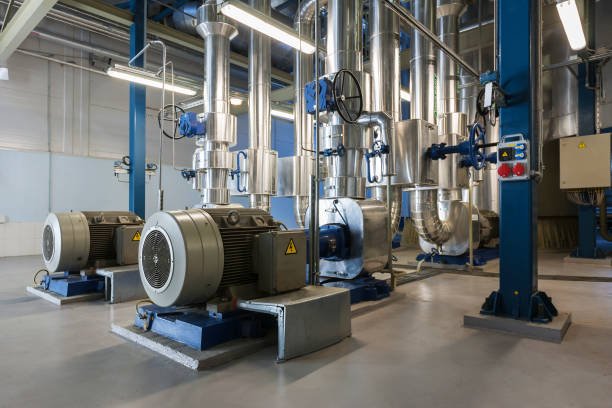
In railway thermal management, reliable cooling is critical for performance, safety, and equipment life. While many people use the term "cooler gas" broadly, in technical applications it usually refers to the refrigerant or cooling medium used to transfer heat efficiently within a system. For companies working in advanced railway cooling, understanding cooler gas is important for selecting the right thermal solution.
At Tesio Cooling Systems India, we manufacture radiators for locomotives and engineered thermal management solutions designed for demanding railway applications. This blog explains what cooler gas is, how it works, where it is used, and why it matters in modern cooling systems.
What Is Cooler Gas?
Cooler gas is commonly used to describe the refrigerant gas or cooling medium that absorbs heat from one area and releases it in another. In cooling systems, this heat transfer process helps maintain the required operating temperature. Although locomotive radiators primarily work through liquid cooling and heat exchange, the broader concept of cooler gas remains important in railway HVAC systems, refrigeration systems, and industrial cooling technologies connected to transport applications.
Types of Cooler Gas
There are several common types of cooler gas used in cooling and refrigeration systems.
1. HFC Refrigerants
Examples include R134a, R410A, and R32. These are widely used in commercial cooling and air conditioning systems.
2. Natural Refrigerants
Natural refrigerants include the following:
Ammonia (R717)
Carbon dioxide (R744)
Propane (R290)
Ammonia (R717)
Carbon dioxide (R744)
Propane (R290)
These are increasingly preferred in modern systems because of their lower environmental impact.
3. Low-GWP Refrigerants
New-generation refrigerants are designed to reduce environmental impact while maintaining cooling efficiency and system performance.
How Cooler Gas Works
To understand how cooler gas works, it is useful to look at the refrigeration cycle.
The gas is compressed to increase pressure and temperature.
It releases heat in the condenser and becomes liquid.
The liquid passes through an expansion device, reducing pressure.
It absorbs heat in the evaporator and returns to gas form.
The gas is compressed to increase pressure and temperature.
It releases heat in the condenser and becomes liquid.
The liquid passes through an expansion device, reducing pressure.
It absorbs heat in the evaporator and returns to gas form.
This cycle allows the refrigerant to move heat efficiently. In railway systems, this principle is important in HVAC and auxiliary cooling applications, while locomotive radiators handle engine heat through robust heat exchanger design.
Cooler Gas and Locomotive Radiators
For railway applications, thermal management is not only about refrigerants. It is also about efficient heat rejection through high-performance locomotive radiators and cooling assemblies.
At Tesio Cooling Systems India, we manufacture radiators for locomotives that are designed for durability, thermal efficiency, and reliable operation in demanding environments. Effective radiator design supports engine protection, stable operating temperatures, and long-term system performance.
While cooler gas is relevant in railway HVAC and refrigeration systems, locomotive engine cooling depends heavily on advanced radiator technology, material quality, and engineered heat transfer performance.
Applications of Cooler Gas
The applications of cooler gas include the following:
Air conditioning systems
Refrigeration systems
Commercial HVAC units
Cold storage systems
Transport cooling systems
Railway HVAC applications
Industrial thermal management systems
In railway infrastructure and rolling stock, cooling technologies must be selected carefully to ensure safety, efficiency, and long service life. Benefits of Using the Right Cooling Medium Choosing the right cooling medium and thermal management system offers several benefits:
- Efficient heat transfer
- Better temperature control
- Improved system reliability
- Lower maintenance risk
- Better energy performance
- Longer equipment life
For locomotive applications, high-quality radiators for locomotives are essential because they directly influence engine cooling efficiency and operational reliability. Safety Considerations and Regulations
Different refrigerants have different safety characteristics. Important considerations include:
- Flammability
- Toxicity
- Pressure handling
- Leak prevention
- Recovery and disposal compliance
- Regulatory approval for use
In railway and industrial applications, all cooling technologies must meet strict safety and performance standards. Environmental Impact of Cooler GasThe environmental impact of cooler gas is usually measured through:
- Ozone Depletion Potential (ODP)
- Global Warming Potential (GWP)
As environmental regulations become stricter, industries are moving toward low-GWP refrigerants, better leak control, and more sustainable thermal management solutions.
Why Tesio Cooling Systems India Matters in Railway Cooling
Tesio Cooling Systems India is focused on engineered thermal management solutions for demanding sectors. As a manufacturer of locomotive radiators, we understand the importance of precision, reliability, and heat transfer efficiency in railway applications.
Our approach combines technical expertise, quality-driven manufacturing, and application-focused engineering to support modern railway cooling requirements.
Conclusion
Understanding cooler gas is important for anyone involved in cooling and thermal management. In railway applications, refrigerants play a role in HVAC and auxiliary systems, while locomotive radiators remain central to engine cooling performance.
At Tesio Cooling Systems India, we manufacture radiators for locomotives built for reliable heat rejection, durability, and performance in challenging operating conditions. For railway cooling systems, choosing the right thermal management solution is essential for safety, efficiency, and long-term reliability.


