
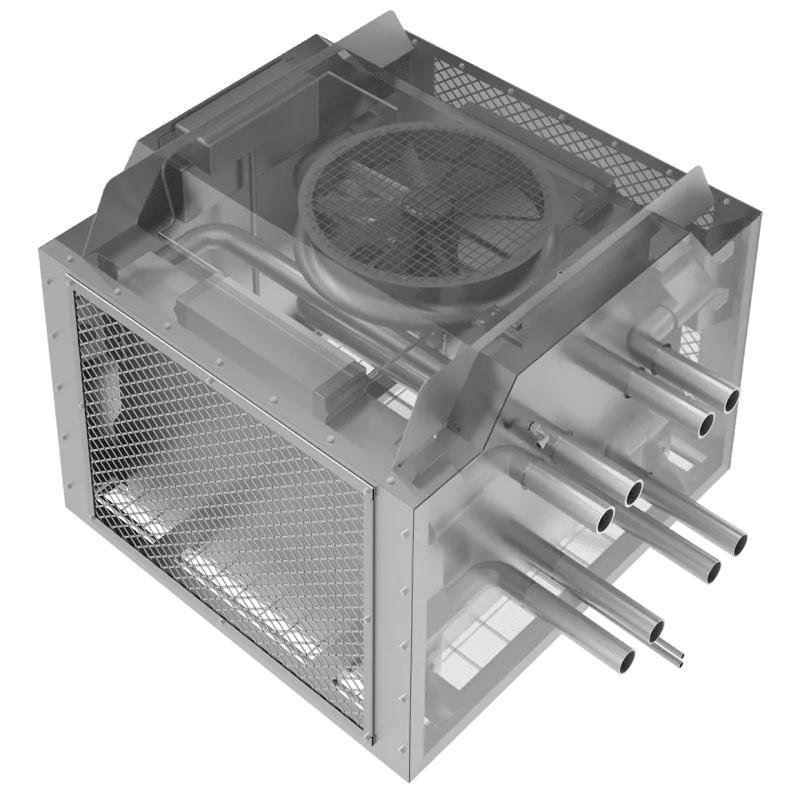
Aftercoolers: Important for Today's Industrial Cooling Systems
Introduction
Compressed air is often called the fourth utility, just like electricity, water, and gas. It's used in many industrial tools and machines, from pneumatic tools to manufacturing equipment. But when air is compressed, it gets very hot, and this heat is a big problem.
Compressed air can reach temperatures over 100°C. This high heat makes systems less efficient and adds moisture, which can cause corrosion, equipment damage, and even stop production. This is where aftercoolers are really important. An aftercooler is a special device that cools compressed air right after it is made. It helps lower the temperature and remove moisture before the air goes to other parts of the system. This makes everything work better, last longer, and run more reliably in industrial settings.
Understanding the Purpose of an Aftercooler. To see why aftercoolers are important, we need to understand what happens when air is being compressed. When air is pushed into a smaller space, the molecules get closer together, which creates heat. Hot air can hold more moisture. As it moves through pipes and cools down, this moisture turns into liquid.
If this moisture is not removed, it can cause several problems:
* Corrosion in pipes and equipment
* Lower efficiency in pneumatic systems
* More maintenance needed
* Contamination of products
* Early equipment failure
An aftercooler solves these issues by cooling the air before it goes into storage tanks, filters, dryers, and other machines.
How an Aftercooler Works: Using an aftercooler is simple but very effective.
Hot compressed air goes into the heat exchanger part of the aftercooler. The heat is passed to a cooling medium like air or water. As the air cools down, the moisture turns into liquid. This liquid is then removed with a moisture separator and drain system. This leaves the air cooler and drier for industrial use. The end result is a more efficient and dependable compressed air system. Types of Aftercoolers
Air-Cooled Aftercoolers
These use the outside air to remove heat from compressed air. A fan blows air over the heat exchanger to help transfer the heat. Air-cooled aftercoolers are popular because they are:
* Cost-efficient
* Easier to install
* Require less maintenance
* Don’t need a water source
They are commonly used in manufacturing plants, workshops, mobile equipment, and remote areas.
Water-Cooled Aftercoolers
These use water as the cooling medium. Water is better at removing heat than air, so these systems are better for tough applications.
Water-cooled aftercoolers are often used in:
* Large manufacturing plants
* Power plants
* Process industries
* Compressor installations that run continuously
Key Benefits of Installing an Aftercooler
Better Compressed Air Quality
Aftercoolers improve the quality of air by cooling and removing moisture. This makes the air clean and suitable for industrial uses.
Protection of Equipment
Moisture can damage pneumatic equipment like valves, cylinders, and tools. It can lead to corrosion and poor performance. An aftercooler helps prevent these issues.
Improved Energy Efficiency
Cooler air puts less strain on dryers and filters. This uses less energy and improves the whole system.
Lower Maintenance Costs
By reducing damage and contamination, aftercoolers help avoid expensive repairs and unexpected maintenance.
Longer Equipment Life
Industrial equipment works best in controlled temperatures. Aftercoolers help devices last longer and run more reliably.
Industrial Applications of Aftercoolers. Aftercoolers are used in many industries.
Manufacturing
Factories rely on compressed air for many processes. Aftercoolers help keep the air clean, reduce stoppages, and improve productivity.
Automotive Industry
From painting to assembly, compressed air quality directly affects product quality and production speed.
Power Generation
Power plants use compressed air in critical systems where reliability is key.
Mining and Construction
These environments are tough on equipment. Aftercoolers ensure steady performance in challenging conditions.
Food and Beverage Industry
Clean, dry compressed air is necessary to keep hygiene standards and protect product quality.
Oil and Gas Operations
Compressed air in exploration and refining needs good temperature and moisture control.
The Importance of Heat Exchanger Technology
The heart of every aftercooler is its heat exchanger. How well the heat exchanger works depends on its design.
Modern aluminum heat exchangers are popular because they are good at conducting heat, lightweight, resistant to corrosion, and take up less space. New heat exchanger technologies allow for better cooling without using more space or energy. For industries looking for better performance, choosing the right heat exchanger is very important.
Choosing the Right Aftercooler
Selecting the right aftercooler isn’t just about matching the airflow.
Engineers should consider several things:
* The temperature of the compressed air
* How much air is moving
* The pressure of the system
* The environment it's in
* The space available
* The temperature of the air after cooling
* How much maintenance is needed
Getting the right size aftercooler makes sure the system runs well and doesn’t cost too much to operate.
Conclusion
Heat is a natural part of air compression, but it can be harmful to industrial processes. Aftercoolers are a simple and effective way to manage compressed air temperature, remove moisture, and protect important equipment. By improving air quality, reducing maintenance, and making systems more efficient, they help increase productivity and reliability. As industries focus on efficiency, saving energy, and making equipment last longer, aftercoolers will continue to be a key part of modern cooling and air systems. For companies looking to boost performance and reduce downtime, investing in the right aftercooler is not just about cooling—it’s about making a smart operational choice.


